On most days in Malawi, motorsport exists as a distant spectacle—something observed rather than experienced.
It flashes across television screens on channels such as SuperSport, where high-performance cars slice through corners at speed and crowds roar in purpose-built circuits far removed from everyday Malawian life.
For many fans, it has long felt like a sport belonging elsewhere—built on infrastructure, investment and systems that are still largely underdeveloped locally.
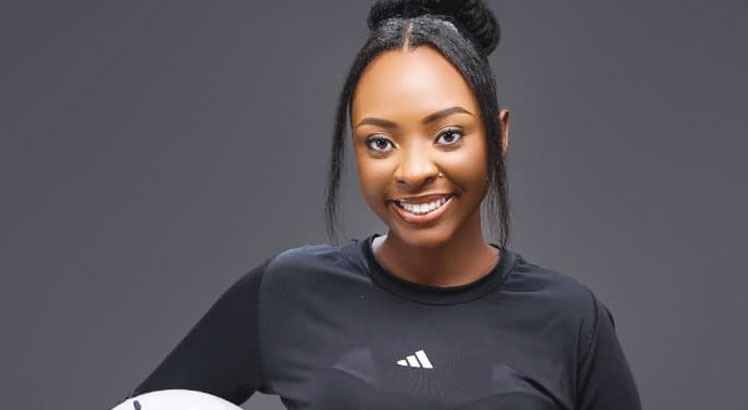
Yet this distance is exactly where 22-year-old Karen Kaphale’s journey begins—not at a racetrack, but in a space where the idea of becoming a racing driver once seemed improbable.
In global motorsport history, pioneers such as Helle Nice broke into a male-dominated sport at a time when women were rarely expected to compete.
Decades later, Karen’s story reflects similar barriers of access, visibility and belonging—though in adifferent context.
Malawi remains underdeveloped, with limited infrastructure where even everyday roads are often uneven dotted with potholes.
Perhaps the idea of professional motorsport could feel like a world apart and no clear local pathways.
Yet Karen believes this should not discourage those interested in the sport.
“People shouldn’t be afraid of it just because it feels far away,” she says. “If you are willing, there is a way to start and build your path step by step.”
Born in Blantyre, her interest began as curiosity that took shape at 17, when she realised that women competed professionally in motorsport.
“I didn’t yet know how I would get into it,” she says, “but I knew I wanted to try.”
Determined to find a pathway, she researched opportunities and reached out to teams abroad.
That effort led to Karen’s first major step in 2024, when she travelled to South Africa to train with WORR Motorsport.
For two weeks, she was immersed in a structured racing environment, learning the fundamentals—racing lines, braking, consistency and racecraft.
“It was my first real exposure to the sport,” she says. “It completely changed how I saw it.”
By the end of the programme, Karen was described as a fast learner with natural ability—feedback that strengthened her resolve to continue.
In 2025, she returned to South Africa for a longer racing period, where she obtained her licence, invested in equipment and began competing.
Karen made her debut at Red Star Raceway in the OK-Junior (OKJ) kart category, while also training across circuits, including Zwartkops Raceway, iDube Raceway and Vereeniging Kart Circuit.
Mastering racing lines eventually became a turning point in her development.
“Once it clicked, everything became more structured,” she says.
Like many young Malawians, Karene initially followed a conventional academic path.
She studied at Kamuzu Academy and was later selected to study automobile engineering at the Malawi University of Business and Applied Sciences (Mubas), a highly competitive programme that she describes as both demanding and rewarding.
“It’s a hard programme to get into and I really enjoyed it,” she says.
Karen was among a small cohort in the class, which included only four female students compared to 10 male students, a balance she says highlighted the gender gap in engineering fields.
However, as her motorsport commitments grew, balancing the two paths became increasingly difficult.
Karen explains that the lack of flexible or online learning options made it challenging to continue fully engaging with the programme while training and competing abroad.
This ultimately led her to adjust her academic direction. She later transitioned to studying law at Cavendish University Zambia, a move that allows her to continue her education while maintaining her racing career.
Beyond personal progression, Karen has also focused on expanding motorsport access locally.
After returning from South Africa, she partnered with Xperience Go-Kart to identify and develop local talent, a collaboration that led to the launch of a team branch in Malawi.
Her ambition now extends beyond karting as she works towards transitioning into car racing and progressing through higher levels of the sport.
Karen is also collaborating with L’Écurie Française through its Racing for Women initiative, gaining insight into elite motorsport structures, including development pathways and the financial and logistical demands of international competition.
She acknowledges motorsport remains heavily male-dominated and often lacks racial diversity.
“In the beginning, I didn’t see many black drivers—neither men nor women,” she says, reflecting on the environments she entered while training and competing abroad.
Seeing representation from drivers such as Queen Kalimpinya, a Rwandan motorsport driver, helped shift her perspective.
Funding remains one of the biggest barriers.
“Motorsport is expensive—equipment, travel, track time and maintenance. And in Malawi, the system is still developing,” she says.
Karen also acknowledges that her journey has not only been shaped by technical and financial challenges, but also by experiences of racism within the sport.
She notes that the lack of representation has been part of her experience in navigating international motorsport spaces.
“At one point, a man shouted at me for not following the racing line and told me to follow his son, who was much faster,” she recalls. “It was overwhelming, but it pushed me to improve.”
“There have been moments I questioned continuing. But I can’t see myself not trying.”
For Karen, the journey is not only about competition, but about changing perception.
“This is still the beginning,” Karen adds. “I’m focused on learning, developing and taking each step as it comes.”
Her defining moment came during her first race weekend at Red Star Raceway.
Competing in the OKJ kart category, she faced multiple setbacks, including crashes in practice, cold conditions and last-minute licence confirmation.
“I wasn’t even sure I should race,” she says.
Despite this, she went on to finish seventh in her first race and sixth in her second.
“That weekend taught me resilience. It showed me I can still perform even when I feel unprepared.”
Looking ahead, she aims to compete internationally, represent Malawi on the global stage and help build pathways for others to follow.
However, Karen says her goal is rooted in motivating Malawians, especially young girls to believe in possibilities that may initially feel out of reach.
“My goal has always been bigger than the podium. I want to motivate girls to see that we belong in any room or industry we choose, no matter how impossible it seems.”